Our Location
5910 Dixie Rd Unit 14
Call Us
(289) 866-9437
Our Location
5910 Dixie Rd Unit 14
Call Us
(289) 866-9437
5910 Dixie Rd Unit 14
(289) 866-9437
5910 Dixie Rd Unit 14
(289) 866-9437
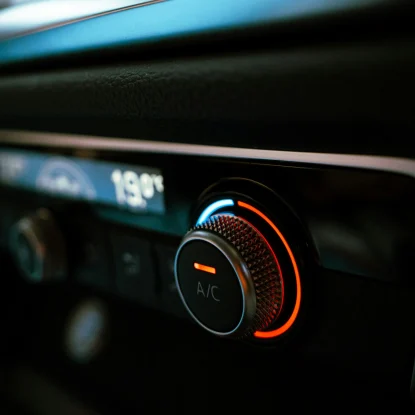
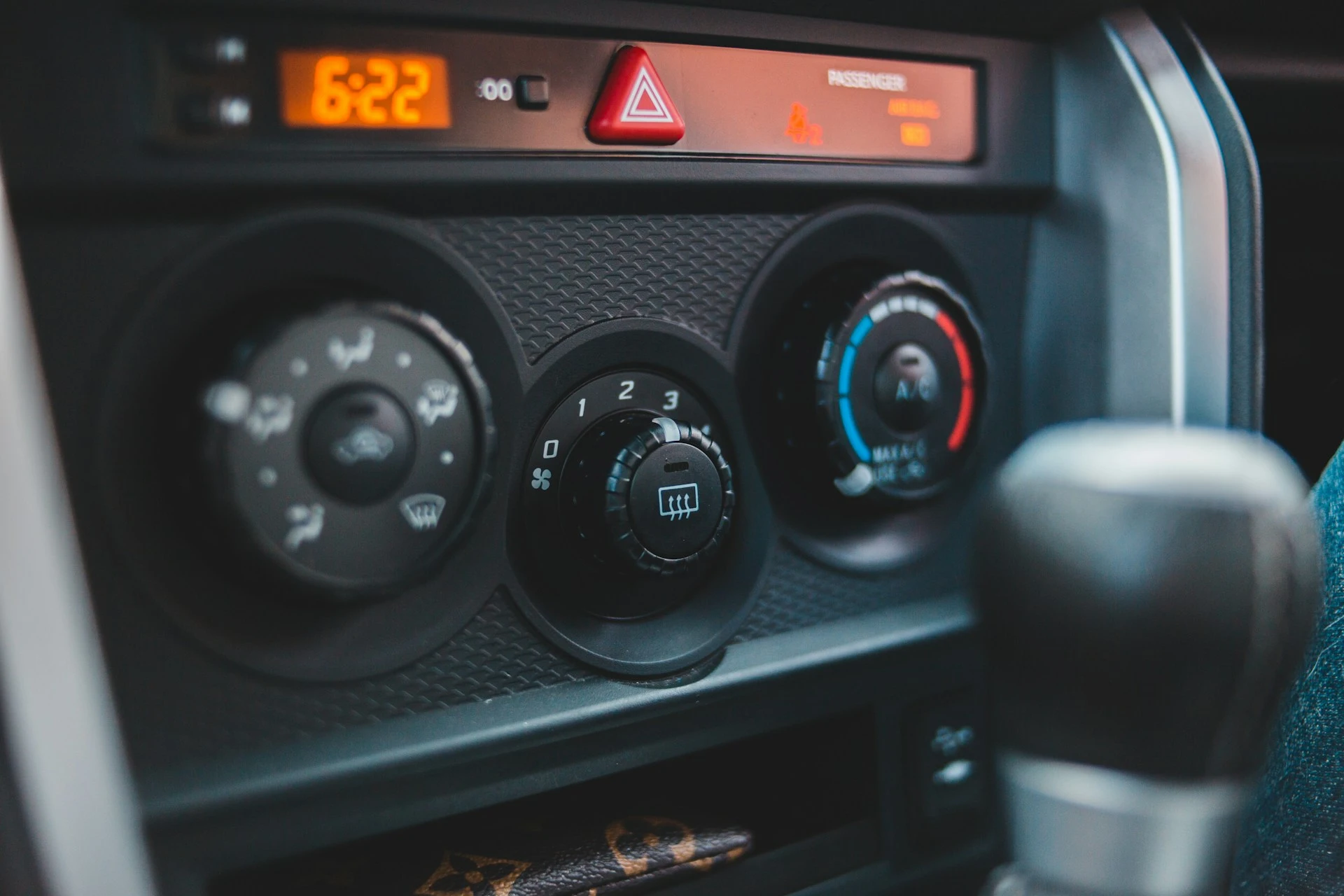
That moment when you turn on the AC and get nothing but warm air can ruin your drive. Especially in the middle of a humid Mississauga summer. You’re stuck in traffic on the QEW or Hurontario. Windows down, hoping the fan will eventually cool things off. It rarely does.
At New Regal Auto Care we fix car AC problems every day. We don’t just recharge the system and send you on your way. We find the real reason your AC stopped working and give you straight answers so you can decide what to do next.
Refrigerant recharge, compressor work, leak detection, condenser repair. We cover the full system. You get a clear explanation of what we found, what it costs, and what happens if you leave it.
No guesswork. No parts replaced on hope. Just accurate diagnosis and honest repairs.
There’s no shortage of shops offering AC service in Mississauga. But a lot of drivers come to us after being told they need a full compressor replacement. Only for us to find a minor refrigerant leak that costs a fraction of that. That happens more than it should.
Here’s what you get when you bring your car to us.
AC systems in Mississauga take a beating that shops in quieter areas don’t always account for. Hot summers. Long winters where the system sits idle for months. Constant stop-and-go on Hurontario and the 403. Our technicians work on local vehicles daily. We know what fails first, what holds up, and what the salt and heat cycles do to rubber hoses and seals over time.
Most AC repairs complete same day. We keep weekend slots available because that’s usually when Mississauga drivers have time. If you’re commuting QEW mornings, you don’t have time for multi-day waits.
We give you a written estimate before any work starts. Pricing varies by vehicle and repair type, and we explain why. Nothing gets added mid-job without a conversation first.
Honestly, this is where a lot of shops get it wrong. They recharge the system without checking for leaks. You’re back in three weeks, and the cycle repeats. We don’t do that. If there’s a leak, we find it before touching the refrigerant. If the compressor is fine, we say so.
We work on passenger cars, SUVs, pickups, and light commercial vehicles. Honda, Toyota, Ford, GM, Hyundai, BMW. The diagnostic process is the same, though components and refrigerant type vary. We confirm your vehicle’s spec before touching anything.
A lot of drivers wait too long. The AC starts acting up in May, they tell themselves it’ll be fine, and by July it’s completely dead. These are the signs worth paying attention to. Check Engine or AC Warning Light On : Modern vehicles monitor AC system pressure and compressor function through sensors. When something reads out of range, a warning light triggers. Some vehicles show a dedicated AC warning. Others store a fault code that only shows on a scan tool. Either way, don’t dismiss it as a sensor glitch without checking.
This is the most obvious one. You press the AC button, fan runs, but the air coming out is warm or room temperature. In most cases this points to low refrigerant, a failed compressor, or a blend door issue. It’s worth getting checked early. Warm air usually means something is already wrong. And running the system dry accelerates compressor wear.
Clicking when the AC engages usually means the compressor clutch is struggling. Rattling could be debris in the blower housing or a loose condenser mount. That typically means internal compressor wear. Don’t ignore these sounds. A grinding compressor that keeps running will eventually contaminate. The whole system with metal debris.
The compressor cycles normally, but if it’s switching on and off every few seconds. That’s a sign of low refrigerant pressure. The system’s pressure switch shuts it off to protect against damage. You’ll sometimes hear it as a rapid clicking from under the hood. Left alone, the compressor eventually fails from the stress.
If the fan spins but almost no air comes through the vents, the blower motor is usually the suspect. Cabin air filters so clogged they block airflow are surprisingly common too. We see this a lot in vehicles that haven’t had a filter change in two or three years. Either way, it’s a straightforward fix when caught early.
That musty, dirty sock smell usually comes from mold or bacteria. Growing on the evaporator core. It sits in a dark, moist environment behind the dashboard perfect conditions for growth. Cabin air filter replacement and evaporator cleaning usually solves it. If the smell is chemical or sweet, that can indicate a refrigerant leak near a fitting.
A small amount of condensation dripping outside the car under the passenger side is normal. That’s the evaporator drain doing its job. Water actually dripping inside onto the floor mat is different. That usually means the drain line is blocked. It’s a minor fix but causes real damage to flooring and subfloor if left.
Mechanics certify through training. They scan codes accurate. Tools pull data swift. Honda owners face belt wear. We replace proper. Subaru AWD needs tune. We handle. No risks. Usually we wrap quick. You collect car ready.
Time presses you. We hustle. Book online or call for any type of Car maintenance. Slot you in. Tire changes take hours. Parts stocked. No waits.
In our experience, we’ve fixed everything from Toyota and Honda sedans to Ford trucks, Chevrolet SUVs, and even European makes like BMW, Mercedes, Volkswagen and More.

Expert Ford repair & maintenance in Mississauga. From engines to brakes, we keep your Ford running strong.

Trusted BMW service in Mississauga. Precision diagnostics and repairs for your ultimate driving machine.

Reliable Toyota repair in Mississauga. Certified mechanics delivering honest, high-quality auto care.

Professional Honda repair in Mississauga. Keeping your Honda safe, smooth, and road-ready year-round.

Skilled RAM truck repair in Mississauga. Heavy-duty service and maintenance for your RAM vehicle.

Dependable GMC repair in Mississauga. Full-service auto care to keep your GMC performing at its best.
If your system is slightly low due to normal permeation through hoses. Over several years and there's no active leak a recharge restores performance. Older vehicles especially lose small amounts over time. If pressures come up and hold, a recharge may be all you need.
If refrigerant level drops noticeably in one season, there's a leak. Recharging without fixing it means you'll be back in a few weeks. A compressor that's grinding, a condenser cracked from road debris. Or an evaporator seeping refrigerant all need proper repair, not a top-up.
We see this pattern often: a driver gets a cheap recharge elsewhere, it works for two weeks, then fails again. Another recharge. Same result. The leak was never found. Proper diagnosis upfront costs less than two or three repeat recharges.

Diagnosis comes first, always. We connect an OBD-II scanner to read any stored fault codes, then move to a manual AC system check. Compressor engagement, pressure readings, electrical connections. This tells whether we're dealing with a refrigerant issue. A mechanical failure, or an electrical fault before we open anything up.
If your system is low on refrigerant and there are no active leaks. A recharge restores cooling performance. We recover the remaining refrigerant properly, pull a vacuum to remove moisture. Then recharge to the manufacturer's specified capacity. Overcharging is just as damaging as undercharging.
We inject UV dye into the system and run it under a UV lamp to locate leaks. Common spots are O-ring seals at fittings, hose connections, the condenser, and the evaporator. Once found, we repair the source before recharging. Skipping leak detection and just recharging is a short-term fix that costs you money twice.
The compressor is the core of your AC system. It pressurizes the refrigerant and drives the whole cooling cycle. When it fails, cooling stops completely. In some cases a clutch repair is sufficient. Full compressor failure usually requires replacement. We always flush the system after compressor replacement to remove any metal debris.
The condenser sits at the front of the vehicle and dissipates heat from the refrigerant. Road debris gravel, stones, road salt buildup. Damages it over time. A bent or clogged condenser reduces cooling efficiency noticeably. In Mississauga winters, road debris and salt are harder on condensers than most drivers realize.
The evaporator sits inside the dashboard and absorbs heat from cabin air. It's one of the harder components to access, which makes labor costs higher. Leaks here show as refrigerant smell inside the cabin or persistent fogging on the windshield. It's not a quick job, but it's the right fix when the evaporator is the source.
High-pressure and low-pressure lines run refrigerant between components.
The blower motor pushes air through the cabin. When it weakens airflow drops.
Most drivers don't realize their cabin air filter exists until it's completely clogged.
Electronic climate systems have more failure points than manual, but they're also more diagnosable.
April or early May is ideal. Book before summer demand peaks. Shops fill up fast in June and July when drivers realize their AC doesn’t work. An early spring check gives time for parts ordering if something needs replacing, so you’re not sweating in a waiting room in mid-July.
Run your AC for five to ten minutes once a week, even in winter. Check that air coming from vents is noticeably cooler than ambient. Listen for unusual sounds on startup. Note if the system takes longer than usual to cool down. These observations help catch changes early.
Don’t run the AC at maximum settings constantly. It puts sustained load on the compressor. Change your cabin air filter on schedule to maintain airflow. Have refrigerant levels checked every two to three years even if everything seems fine. A compressor running low on refrigerant also runs low on the lubricant that refrigerant carries. That’s what causes premature wear.
Mississauga summers combine heat with high humidity from Lake Ontario. Humid air requires more cooling energy than dry air. The system runs longer and harder to reach the same cabin temperature. UV exposure also degrades rubber hoses and seals faster on vehicles that park outdoors regularly.
Highway-speed driving actually helps AC efficiency. Airflow across the condenser dissipates heat faster. Sitting in stop-and-go on the QEW or Hurontario during rush hour makes the system work much harder. The condenser fan carries more of the load, and compressor cycling increases. This wears components faster over a Mississauga driving life. Than the same mileage elsewhere.
Most Mississauga drivers don’t run their AC from November through April. Six months of inactivity lets compressor lubricant settle. O-rings dry slightly, and moisture accumulate in the system. Running the AC briefly through winter once a week for a few minutes. Keeps seals conditioned and lubricant circulating.
Road salt spray reaches the condenser and hose fittings. Temperature cycling stresses rubber seals. High humidity loads the system continuously in summer. These factors combined mean Mississauga vehicles typically need AC service. More frequently than the same vehicle driven in a drier or milder climate.

We start by listening to you. What are you noticing? When does it happen? How long has it been going on? Then we do a visual check belts, hoses, condenser condition, refrigerant sight glass if accessible. This takes ten minutes and often tells us a lot before we even plug in a scanner.
We read fault codes from the vehicle's computer. Not every AC problem throws a code, but many do. We also test compressor engagement and monitor pressure readings at idle and under load.
High and low side pressures tell us the refrigerant charge level and point toward specific failures. UV dye injection under a lamp confirms leak locations. This step prevents us from recommending the wrong repair.
Once diagnosis is complete, we present findings and options. We explain what needs fixing, what it involves, and what it costs. You approve the work. We proceed.
After repairs, we evacuate the system to remove air and moisture. Hold a vacuum to confirm no remaining leaks. Then recharge to manufacturer spec using the correct refrigerant for your vehicle.
We run the AC for ten to fifteen minutes and measure vent temperature. A properly functioning system should reach 4-8°C at the vents on a warm day. We verify before you leave.

Sunderpreet Singh N/A

Jon Levey

Dimitri Liakos
If your AC is blowing warm, making noise, or just not cooling the way it used to, don’t wait for peak summer to find out how bad it’s gotten. Early diagnosis is almost always cheaper than emergency repair in July.
Book online, call us, or stop in. We’ll take a look, tell you what we find, and give you a clear path forward. No pressure. Just honest AC repair in Mississauga from a team that actually knows the system.
Most commonly it's low refrigerant from a leak, a failed compressor, or an electrical issue stopping the compressor from engaging. Sometimes it's as simple as a blown fuse. Diagnosis identifies the exact cause before anything is replaced.
A recharge refills refrigerant. A repair fixes the underlying problem causing refrigerant loss or system failure. Recharging without repairing a leak means you'll lose refrigerant again. Proper diagnosis determines which you actually need.
A recharge takes 60-90 minutes typically. Compressor replacement usually takes 3-5 hours depending on vehicle access. Evaporator replacement can take a full day. Most repairs complete same day.
Not always. Very small amounts permeate through hoses naturally over many years. But if refrigerant is noticeably low within one season, a leak is almost certainly the cause. We pressure-test and use UV dye to confirm either way.
Yes. A failing compressor that continues running can send metal fragments through the system, contaminating the condenser, expansion valve, and receiver-drier. A full system flush and multiple part replacements often follow a catastrophic compressor failure. Early repair prevents this.
Every two to three years is a reasonable guideline for inspection and refrigerant level check. If you notice any cooling drop or unusual sounds, don't wait for a scheduled interval.
Vehicles made before roughly 2015-2017 typically use R-134a. Newer vehicles increasingly use R-1234yf. Check the sticker under the hood near the AC components or your owner manual. We verify this before every recharge.
Mold and bacteria on the evaporator core is the most common cause. Cabin air filter replacement and evaporator treatment clears it in most cases. A sweet chemical smell points to refrigerant, which warrants a leak check.
The car will drive fine mechanically. But on hot humid Mississauga days, heat inside a closed vehicle builds fast. If the AC compressor is grinding or seizing, disconnect it from the belt circuit rather than let it fail completely. A seized compressor can damage the belt and pulley system.
In most cases yes. Recharges, blower motor replacements, hose repairs, and most leak fixes complete same day. Compressor jobs and evaporator repairs may need a full day. We confirm turnaround time when you book.
We check compressor engagement, high and low side pressures, blower function, cabin air filter condition, visible hose and fitting condition, OBD-II fault codes, and UV dye for leaks if indicated. You get a verbal and written summary of findings.
Dealerships charge manufacturer-set labor rates and typically require OEM parts. Independent shops set their own rates and source quality equivalent parts at lower cost. The technical work is the same. The markup structure is different.
Yes. We work with local Mississauga businesses running delivery vans, service trucks, and company cars. We coordinate scheduling to reduce vehicle downtime and keep your fleet operational through summer.
Protecting the Compressor Before It Fails Completely : Don't let a $200 leak repair become a $1,200 compressor job.
Preventing Damage to Related AC Components : When a compressor fails internally, it sends metal fragments through the refrigerant lines. Early repair prevents cascade failure.
Better Air Quality and Health Inside Your Vehicle : A functioning AC system does more than cool air. It dehumidifies the cabin and filters particulates through the cabin air filter. For drivers with allergies or asthma, this matters more than comfort alone.
Erin Mills, Streetsville, Meadowvale, Port Credit, Cooksville, Clarkson, Mississauga Valley and more.
Passenger Cars
Compact and mid-size cars are the most common AC jobs we see. Honda Civics, Toyota Corollas, Hyundai Elantras. Compressor clutch issues and refrigerant leaks at O-ring fittings are the most frequent repairs. Straightforward in most cases.
SUVs and Crossovers
SUVs and crossovers with dual-zone climate control have more components. Additional blend doors, rear zone blower motors, longer refrigerant lines. Diagnosis takes more time, but repairs follow the same process. We see condenser damage more often in SUVs due to lower front clearance.
Pickup Trucks
Trucks used for work — hauling, towing, rough terrain — are harder on AC systems generally. Condenser damage from road debris is common. Some trucks have rear AC units requiring separate attention.
Fleet and Commercial Vehicles
We work with local Mississauga businesses running delivery vans and service vehicles. Fleet AC issues compound fast — a driver in a hot van loses productivity and comfort. We coordinate scheduling to minimize downtime and keep vehicles moving.
R-134a vs R-1234yf – Which One Does Your Car Use
Most vehicles manufactured before 2015-2017 use R-134a refrigerant. Newer vehicles — particularly 2017 and later. Increasingly use R-1234yf, which has a significantly lower global warming potential. The two are not interchangeable. Using the wrong type damages the system and voids manufacturer specs. We confirm your vehicle's refrigerant type. From the door placard or owner manual before any recharge.
Why Refrigerant Leaks Happen Over Time
Refrigerant doesn't burn or get consumed. It should stay in the system indefinitely. Leaks happen when O-ring seals dry out and crack. Hoses develop micro-perforations, or physical damage hits the condenser. Mississauga's temperature swings from -20°C winters to 35°C summers. Stress rubber seals more than moderate climates.
Ontario Regulations on Refrigerant Handling and Disposal
In Ontario, refrigerant handling is regulated. Under the Environmental Protection Act and federal regulations. Technicians must be certified to purchase and handle refrigerants. Recovered refrigerant must be recycled or destroyed. Venting it is illegal. We handle all refrigerant recovery and recycling through proper certified channels.

Your trusted auto repair shop in Mississauga, offering expert car maintenance, body repair, and professional service with over 10+ years of experience.
Our Support and Sales team is available 24 /7 to answer your queries
New Regal Auto Care
Copyright © 2026. All rights reserved.